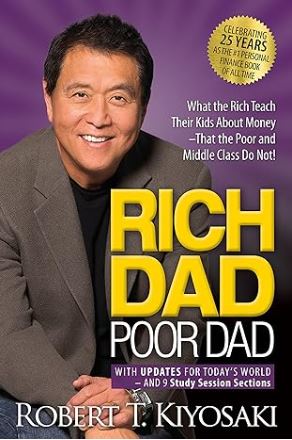
Financial Literacy Revolution: Rich Dad, Poor Dad by Kiyosaki
Chapter 1: Rich Dad, Poor Dad
Summary:
In the first chapter, Kiyosaki introduces the contrasting financial philosophies of his two father figures—his biological father (Poor Dad) and his best friend’s father (Rich Dad). Poor Dad is highly educated and works hard but struggles financially, while Rich Dad, who didn’t complete eighth grade, becomes a wealthy entrepreneur. This chapter sets the stage for the lessons Kiyosaki learns from Rich Dad, which form the core of the book.
My Analysis:
The primary lesson here is the difference in mindset between the rich and the poor. Poor Dad believes in traditional education and job security, while Rich Dad emphasizes financial education and entrepreneurship. Kiyosaki highlights the importance of understanding how money works and learning the skills necessary to build wealth.
Relevance in Today’s Financial Climate
The contrasting philosophies of Rich Dad and Poor Dad highlight the importance of financial literacy, which is crucial in today’s complex economic environment. As job markets evolve and traditional career paths become less stable, understanding how to manage and grow money becomes essential. This chapter encourages readers to question conventional financial advice and seek out knowledge that can lead to financial independence.
Chapter 2: The Rich Don’t Work for Money
Summary:
Kiyosaki explains that the rich don’t work for money; instead, they make money work for them. He describes his early experiences working for Rich Dad, who taught him valuable lessons about the power of money, including the importance of seeking opportunities and solving problems to create wealth.
My Analysis:
This chapter introduces the concept of financial independence. Kiyosaki stresses that relying solely on a pay check limits financial growth. He encourages readers to develop a mindset focused on creating and seizing opportunities that generate passive income, rather than working for someone else’s benefit.
Relevance in Today’s Financial Climate
In today’s gig economy and digital age, the idea of not working solely for money is more pertinent than ever. Many people now have the opportunity to create multiple income streams through side hustles, freelancing, and online businesses. This chapter’s lesson encourages a shift in mindset from working for a pay check to creating and leveraging income-generating opportunities, which can provide financial security and freedom.
Chapter 3: Why Teach Financial Literacy?
Summary:
Kiyosaki discusses the importance of financial literacy. He emphasizes that knowing the difference between assets and liabilities is crucial. Rich Dad taught him that assets put money in your pocket, while liabilities take money out of your pocket.
My Analysis:
This chapter is foundational for understanding how to build wealth. Kiyosaki underscores that financial education is often neglected in traditional schooling. He advocates for learning how to identify and acquire assets, such as real estate, stocks, and businesses, to build and sustain wealth.
Relevance in Today’s Financial Climate
Financial literacy is increasingly important as individuals are required to make more complex financial decisions, from managing student loans to investing for retirement. In a world where financial products are often complex and sometimes predatory, understanding the basics of finance can protect individuals from debt traps and poor financial choices. This chapter underscores the necessity of financial education to navigate today’s economic landscape effectively.
Chapter 4: Mind Your Own Business
Summary:
Kiyosaki advises readers to mind their own business, meaning they should focus on building their asset columns rather than solely working for others. He shares stories of how people can start acquiring assets even while working regular jobs.
My Analysis:
The key takeaway is the importance of developing and maintaining personal financial growth. Kiyosaki suggests that individuals should always look for ways to create additional income streams and invest in assets, rather than relying solely on their salaries.
Relevance in Today’s Financial Climate
With the rise of the gig economy, entrepreneurship, and the availability of investment opportunities online, focusing on personal financial growth is more accessible and important than ever. This chapter’s advice to build and maintain personal assets aligns with the modern trend of individuals taking control of their financial futures by investing in stocks, real estate, or starting their own businesses.
Chapter 5: The History of Taxes and the Power of Corporations
Summary:
This chapter delves into the history of taxes and how the wealthy use corporations to protect and enhance their wealth. Kiyosaki explains how the rich take advantage of tax laws and corporate structures to minimize tax liabilities and maximize profits.
My Analysis:
Kiyosaki highlights the benefits of understanding tax laws and using legal structures like corporations to one’s advantage. He suggests that financial education should include learning about tax strategies and corporate benefits, which can significantly impact wealth-building efforts.
Relevance in Today’s Financial Climate
Understanding taxes and corporate structures is critical in today’s world, where tax laws are complex and ever-changing. This chapter’s insights can help individuals and small business owners legally minimize their tax liabilities and protect their assets. In an era of globalization and digital business, leveraging corporate structures can provide significant financial advantages and opportunities.
Chapter 6: The Rich Invent Money
Summary:
Kiyosaki illustrates how creativity and financial intelligence can lead to wealth. He shares examples of how the rich create money by finding unique opportunities and leveraging their knowledge and resources.
My Analysis:
This chapter encourages readers to think outside the box and be proactive in seeking and creating financial opportunities. Kiyosaki emphasizes that with the right mindset and financial education, anyone can find ways to create wealth.
Relevance in Today’s Financial Climate
Innovation and entrepreneurship are driving forces in today’s economy. With advancements in technology and the internet, the barriers to entry for creating wealth through new ideas and ventures are lower than ever. This chapter’s emphasis on creativity and financial intelligence resonates with the current trend of startups and disruptive business models that can lead to significant financial success.
Chapter 7: Work to Learn—Don’t Work for Money
Summary:
Kiyosaki advises focusing on learning and developing skills rather than merely working for a pay check. He shares his experiences of taking jobs to acquire specific skills that would benefit his entrepreneurial endeavors.
My Analysis:
The emphasis here is on continuous learning and personal development. Kiyosaki suggests that building a broad skill set can lead to greater opportunities and financial success. He encourages readers to seek jobs and experiences that enhance their knowledge and abilities.
Relevance in Today’s Financial Climate:
In a rapidly changing job market, continuous learning and skill development are essential. This chapter’s advice to focus on acquiring valuable skills rather than just earning a pay check is highly relevant, as it encourages adaptability and lifelong learning. These qualities are crucial for career advancement and financial stability in today’s dynamic and competitive environment.
Chapter 8: Overcoming Obstacles
Summary:
Kiyosaki addresses the common obstacles that people face when striving for financial success, including fear, cynicism, laziness, bad habits, and arrogance. He provides strategies for overcoming these barriers.
My Analysis:
This chapter is motivational, focusing on the mental and emotional challenges of achieving financial independence. Kiyosaki offers practical advice on how to overcome fears and negative attitudes that can hinder financial progress.
Relevance in Today’s Financial Climate
Today’s world presents numerous challenges, from economic uncertainty to technological disruptions. This chapter’s focus on overcoming fear, cynicism, laziness, bad habits, and arrogance is relevant as it provides practical strategies to build resilience and maintain a positive mindset. These traits are essential for navigating the complexities and uncertainties of the modern economy.
Chapter 9: Getting Started
Summary:
Kiyosaki provides practical steps for getting started on the path to financial freedom. He offers tips on finding mentors, joining investment groups, and continuing financial education.
My Analysis:
The chapter serves as a practical guide for readers who are ready to take action. Kiyosaki’s tips are designed to help individuals start building their financial foundation and create a plan for ongoing growth and learning.
Relevance in Today’s Financial Climate
Taking the first step towards financial independence can be daunting in today’s complex financial landscape. This chapter’s practical advice on getting started—finding mentors, joining investment groups, and continuing education—is particularly relevant as it provides a roadmap for individuals looking to improve their financial situation amidst a plethora of options and information.
Chapter 10: Still Want More? Here Are Some To Do’s
Summary:
In the final chapter, Kiyosaki offers additional advice and resources for those who want to delve deeper into financial education and wealth-building. He provides a list of recommended actions and further reading.
My Analysis:
Kiyosaki reinforces the importance of taking action and continuing education. He leaves readers with a sense of empowerment and a roadmap for further financial exploration and growth.
Relevance in Today’s Financial Climate
The emphasis on continuous improvement and lifelong learning is crucial in today’s fast-paced and ever-evolving world. This chapter’s additional advice and resources encourage readers to stay informed and proactive about their financial education, which is essential for adapting to new opportunities and challenges in the global economy.
Conclusion
“Rich Dad Poor Dad” by Robert Kiyosaki is a must-read for anyone aiming to understand personal finance and achieve financial independence. Kiyosaki’s engaging storytelling and practical advice challenge conventional wisdom about money, offering timeless lessons on financial literacy, asset building, and entrepreneurship.
In today’s complex financial world, these insights are more relevant than ever. This book will empower you to take control of your financial future, make informed decisions, and create multiple income streams for lasting wealth and freedom.
Don’t miss out on transforming your financial destiny. Get your copy of “Rich Dad Poor Dad” today by clicking here.
Start your journey to financial success now!

 Finance World
Leave a reply to Free KetoDietRecipes & Guides Cancel reply